
Collagen is the most abundant protein in the human body, yet from our mid-twenties onwards, production begins to decline at a steady rate. The result? Fine lines, loss of elasticity, and skin that simply does not bounce back the way it once did. It is no surprise, then, that the collagen skincare and supplement market has exploded in recent years, leaving many of us wondering which products are actually worth the investment.
Finding the best collagen products for your skin is not as straightforward as it might seem. The market is saturated with masks, serums, powders, and capsules, each making bold promises about turning back the clock. Knowing what to look for, and which formats genuinely deliver results, makes all the difference.
In this guide, we have done the research for you. Whether you are looking to boost your routine with a targeted supplement, treat yourself to a deeply nourishing mask, or explore the broader world of collagen-infused skincare, you will find the most effective options currently available in the UK right here.
Why Collagen Is the UK's Fastest-Growing Beauty Category
Collagen has moved from wellness footnote to headline act in the UK beauty market, and the numbers confirm it is no passing trend. Boots reported a 62% rise in collagen sales in 2025, while one major retailer alone sold nearly two million collagen products in a single year, roughly 5,302 units every day. These are not the figures of a niche ingredient finding its audience; they represent a fundamental reordering of how UK consumers prioritise skincare investment.
Topical collagen formats have accelerated that shift further. Google searches for collagen face masks climbed approximately 40% year-on-year, per Vogue data, signalling that masks, serums, and eye patches now command independent consumer attention rather than riding the coattails of the ingestibles category. Sheet masks in particular have emerged as a distinct purchase decision, with K-beauty formats driving repeated sell-out events across UK retail channels.
Marine collagen has become the standout sub-segment, with UK search volume surging 227% in 2025 according to Boots data. Clean-label preferences and influencer-led content on TikTok and Instagram have positioned marine collagen as both a more sustainable and a more bioavailable choice for consumers seeking targeted skin support. According to market analysis of the UK collagen industry, the UK market is formally segmented across supplements, personal care, and cosmetics, with marine increasingly challenging bovine dominance across all formats.
The global picture reinforces the trajectory. The global collagen supplement market is valued at USD 1.92 billion in 2026 and forecast to reach USD 3.56 billion by 2036, growing at a 6.4% CAGR. The broader beauty supplements segment is expanding even faster, projected at a 10.3% CAGR through 2033, driven by the convergence of wellness culture and daily skincare rituals.
Social media, celebrity endorsement, and health professionals have collectively repositioned collagen from an occasional anti-ageing treatment into a non-negotiable daily essential. That shift in perception directly changes purchasing behaviour; consumers are no longer buying collagen once to try it, they are replenishing it monthly as part of a structured routine. For anyone researching the best collagen products in 2025, understanding this market context helps explain why product innovation, format diversity, and ingredient transparency have never mattered more.
What Is Hydrolysed Collagen and Why Does It Matter for Your Skin?
Collagen is the structural scaffolding of your skin, accounting for roughly 30% of total body protein and forming the dense network of fibres that keeps skin firm, plump, and smooth. As dermatologist Dr Justine Hextall explains, natural collagen production begins declining noticeably from the early thirties onward, with adults losing approximately 1% of skin collagen per year. Over time, this steady depletion contributes to the thinning, sagging, and fine lines that are the hallmarks of skin ageing. The practical implication is clear: replenishing or supporting collagen through targeted skincare and supplementation becomes increasingly relevant from your thirties forward.
The Science Behind Hydrolysation
Not all collagen is created equal, and this distinction is where most consumers go wrong. Standard collagen molecules are large, complex protein structures that are poorly absorbed by the body in their intact form. Hydrolysed collagen, sometimes labelled collagen peptides, is collagen that has been broken down into much smaller peptide chains through enzymatic processing, typically to under 3,500 daltons. This reduction in molecular size dramatically improves bioavailability, meaning the body can absorb and utilise the peptides far more efficiently. Preliminary evidence suggests that some of these peptides may remain intact during digestion and accumulate in skin and cartilage tissue, which is the biological rationale behind supplementation. Published research in the Journal of Clinical and Aesthetic Dermatology confirms that hydrolysed collagen supplementation can improve skin moisturisation, smoothness, and wrinkle appearance with consistent use.
Why Hydrolysed Collagen Dominates the Market
Consumer demand and scientific credibility have moved in the same direction. Hydrolysed collagen is projected to account for 63.7% of the collagen supplement product-type segment in 2026, a market position driven by superior efficacy and growing consumer trust in the peptide format. This dominance is not coincidental; it reflects a category maturing around evidence rather than marketing alone.
Topical Application: Why Molecular Size Matters
For skincare products such as masks and serums, the molecular weight advantage becomes even more significant. Standard collagen molecules are too large to penetrate beyond the skin's surface, where they sit as a temporary film without meaningfully interacting with deeper tissue. Hydrolysed collagen peptides, with their reduced molecular weight, are small enough to penetrate the upper layers of the skin and deliver active support where it counts. This is precisely why the format matters in topical products, including sheet masks like those from Glow & Stow.
The Buying Decision Most Guides Miss
Understanding the difference between hydrolysed and non-hydrolysed collagen is arguably the single most important decision you can make when choosing a collagen product, yet the majority of best collagen roundups skip past it entirely. When reviewing any collagen product, look for the terms "hydrolysed collagen," "collagen peptides," or a disclosed low molecular weight on the label. These indicators confirm you are choosing a format that your body can actually absorb and use, rather than one that delivers little beyond the ingredient list.
Best Collagen Format: Hydrolysed Collagen Sheet Masks
Of all the formats competing for the title of best collagen delivery method, hydrolysed collagen sheet masks occupy a uniquely powerful position. Unlike leave-on creams that evaporate or absorb unevenly, a sheet mask works through occlusion: the physical barrier of the mask prevents serum from evaporating, trapping concentrated peptides in sustained contact with the skin surface. This occlusive effect can increase skin hydration by up to 40% in as little as 15 to 20 minutes, and the prolonged contact time drives meaningfully deeper absorption of active ingredients than most topical alternatives can achieve. Premium mask materials, such as biocellulose, amplify this further by holding up to 100 times their dry weight in fluid, creating a continuous reservoir of actives pressed flush against the skin throughout the treatment.
The key distinction lies in the form of collagen used. Plain "collagen" on an ingredient list refers to native collagen, which has a molecular weight too large for effective skin penetration. Hydrolysed collagen, by contrast, has been enzymatically broken down into smaller peptides that are far better positioned to interact with the upper layers of the skin. A comprehensive clinical evaluation published on PubMed confirmed that collagen sheet masks produce measurable improvements in skin health and appearance, lending peer-reviewed credibility to a format that has long been a K-beauty staple.
Why the Sheet Mask Format Suits Modern Routines
Sheet masks are not daily moisturisers, and they are not supplements. They occupy a third category: intensive, time-defined treatments that deliver a concentrated collagen boost within a fixed 15 to 20 minute window. This makes them exceptionally practical for women who want visible plumping and firmness results without restructuring their diet, adding ingestibles, or committing to a daily supplement schedule. The format is particularly well suited to women in their early-to-mid thirties who are beginning to notice the first signs of collagen depletion, such as subtle loss of definition or a slight reduction in bounce, but who want results that are immediate and measurable rather than gradual.
The timing also lends itself to pre-event use. Applied the evening before or the morning of an occasion, a hydrolysed collagen sheet mask delivers a temporary but visible plumping effect that works well as part of a wider makeup preparation ritual.
K-Beauty Momentum and the UK Market
The surge in sheet mask popularity is significantly K-beauty driven. As Glamour UK has noted, Korean collagen masks have become synonymous with the glass skin aesthetic, and their mainstream appeal "shows no sign of slowing." K-beauty experts consulted by Glamour have confirmed the format's staying power heading into 2026, with repeated sell-out events across UK retail channels underscoring consistent demand rather than a fleeting trend cycle.
For UK shoppers seeking a premium, accessible alternative with reliable domestic logistics, Glow & Stow's hydrolysed collagen sheet masks offer a strong option. Orders over £50 qualify for free shipping, delivery is tracked within 24 to 48 hours, and Klarna pay-later options are available for those who prefer flexible payment.
What to Look for When Buying
Buying criteria matter in this category. Always check the ingredient list for "hydrolysed collagen" specifically rather than plain collagen. Look for complementary actives: hyaluronic acid adds humectant hydration that layers well with collagen peptides, while niacinamide supports brightening and barrier function. Pay attention to mask material and fit; biocellulose or hydrogel formats retain serum better than basic microfibre, and a full-coverage cut that sits close around the jaw, nose, and hairline ensures the occlusive effect works evenly across all contour zones rather than leaving gaps where absorption is lost.
Best Collagen Format: Powders and Ingestible Supplements
While topical formats deliver hydrolysed collagen directly to the skin's surface, ingestible supplements work from the inside out, circulating collagen peptides systemically through the bloodstream to support skin, hair, nails, joints, and connective tissue simultaneously. Understanding the landscape of available formats helps you make smarter purchasing decisions rather than simply reaching for whatever is most prominently marketed.
Powder: The Dominant Format for Good Reason
Collagen powder commands the largest share of the supplement market by revenue, accounting for approximately 58.4% of form-type revenue in 2026 according to Future Market Insights collagen supplement data. Its dominance is not accidental. Powder is exceptionally versatile; it dissolves into morning coffee, smoothies, soups, or plain water without significantly altering taste, particularly in unflavoured variants. Dosing is also fully customisable, allowing users to increase intake gradually or adjust for specific outcomes such as joint support versus skin-focused results. For consumers building a consistent daily routine, powder integrates far more naturally than capsules taken on a schedule.
Bovine vs. Marine: Choosing Your Source
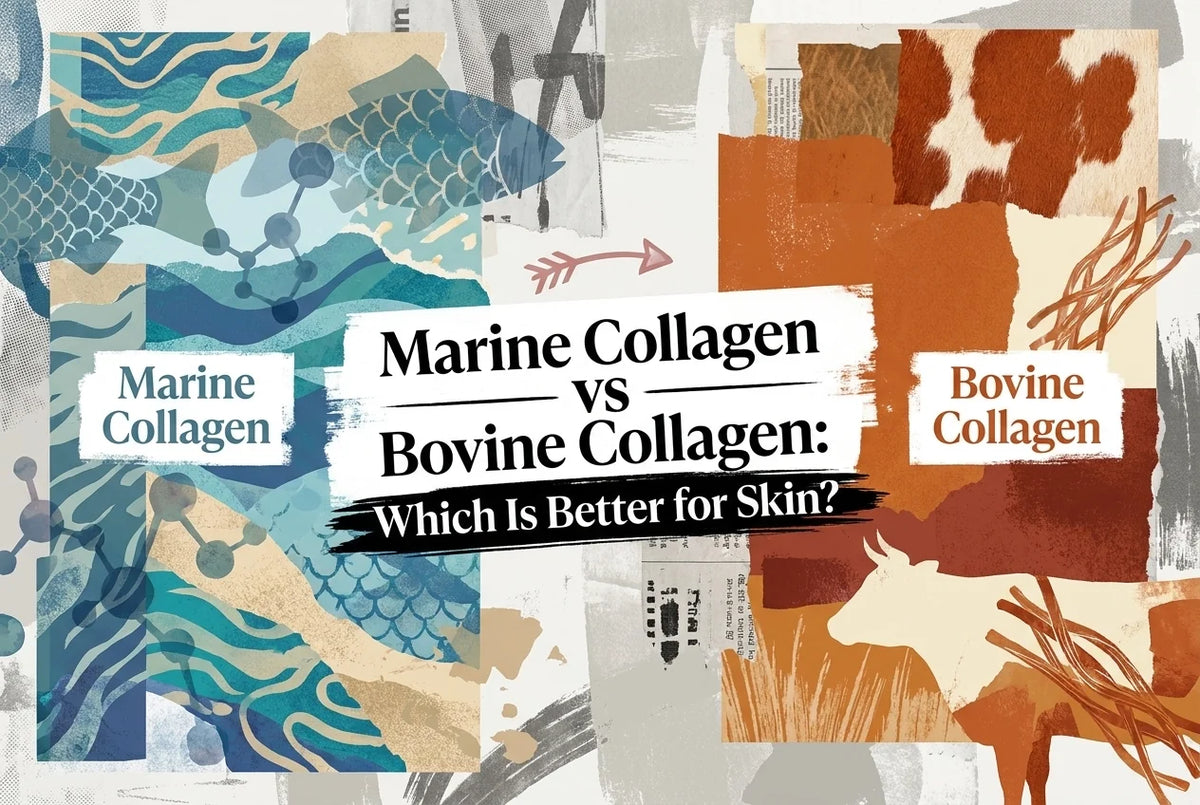
Bovine collagen leads all source types with a substantial revenue share, driven by established clinical evidence, reliable supply chains, and a strong ratio of Type I and Type III collagen, which are the peptides most directly associated with skin firmness, hair strength, and nail integrity. Marine collagen, however, is the fastest-growing search term in the UK supplements space, with Boots reporting marine collagen searches up 227% in 2025. Marine collagen appeals to pescatarian consumers and those drawn to lighter-texture formats, and it also carries sustainability and religious dietary compliance credentials that bovine sources cannot offer. Both are highly effective when properly hydrolysed; source preference often comes down to dietary values and individual lifestyle rather than a clear efficacy gap.
What to Look for Before You Buy
Navigating the collagen supplement aisle requires a few non-negotiable quality markers. First, confirm the product uses hydrolysed peptides with a disclosed molecular weight; under 5,000 Daltons is the recognised industry benchmark for optimal bioavailability, as smaller peptide chains are absorbed more readily through the gut wall. Second, look for added vitamin C in the formulation, since vitamin C is a documented co-factor in the body's own collagen synthesis pathway and meaningfully enhances the systemic effect. Third, verify independent third-party testing, particularly for heavy metal screening; this is especially important with marine-sourced products, where contamination risk from ocean-derived raw materials is higher. Certifications from recognised bodies such as NSF International or Informed Sport provide additional assurance.
A Clear Word on Vegan Collagen Boosters
One growing segment worth addressing honestly is plant-based "collagen boosters," typically formulated with vitamin C, zinc, and silica. These products do not deliver collagen directly; no plant source contains collagen, as it is an exclusively animal-derived protein. What they do instead is provide the nutritional building blocks that support your body's natural collagen production pathway. This is a genuinely useful and growing clean-label category, but it operates on a fundamentally different mechanism than animal-derived hydrolysed peptides. Consumers choosing vegan formats should understand this distinction clearly rather than assuming equivalence with bovine or marine collagen supplements. Ingestibles of any kind work best when paired with topical formats rather than used in isolation, making them a complementary pillar of a well-rounded collagen routine rather than a standalone solution.
Best Collagen Format: Serums and Topical Creams
Topical collagen serums and creams represent the most established format in the UK beauty market, and the consumer appetite for them shows no sign of slowing. Premium topical products in this space attract over 7,000 monthly UK Google searches at the brand level alone, a figure that reflects decades of retail presence and deep consumer familiarity. With Boots reporting overall collagen sales up 62% in 2025 and marine collagen searches rising 227% in the same period, it is clear that topical formats are benefiting from the broader collagen boom rather than being displaced by newer categories.
Serums vs. Creams: Choosing the Right Vehicle
The distinction between serums and creams matters more than many shoppers realise. Collagen serums are formulated as lightweight, fast-absorbing vehicles that layer cleanly under moisturiser and SPF, making them ideal for daily morning or evening routines. Creams, by contrast, are richer and more occlusive; their film-forming properties help reduce transepidermal water loss, which makes them particularly well-suited to drier or more mature skin types that need both collagen support and sustained barrier protection. As a general rule, apply thinner textures first and build toward richer, more occlusive layers to maintain ingredient efficacy across a full routine.
The Absorption Limitation You Need to Know
The honest caveat with leave-on topical products is that they rely on passive diffusion through the stratum corneum, the skin's outermost barrier layer. Without the sustained occlusive pressure and saturation environment created by a sheet mask, or the enhanced delivery enabled by a skincare device, absorption depth is more limited compared to assisted formats. A 2021 University of Nottingham study did demonstrate that signal peptides such as Matrixyl 3000+ can penetrate up to ten surface layers of the stratum corneum, which nuances the traditional assumption that topical ingredients remain entirely at the surface, but deep dermal penetration without assisted delivery remains limited.
Layering Serums with Sheet Masks for Better Results
One practical strategy for getting more from a collagen serum is to pair it with a hydrolysed collagen sheet mask within the same routine. Apply the serum first, allow it to absorb briefly, then apply the mask over the top. The occlusive environment of the mask locks in the preceding serum, extends the hydration window, and supports deeper ingredient contact than either product achieves independently. This layering approach mirrors the multi-step philosophy behind the K-beauty routines that are driving the approximately 40% year-on-year surge in collagen mask searches.
Prioritise Peptide Synergy in Your Serum Selection
When choosing a collagen serum, formulation matters far more than collagen concentration alone. The most effective options combine hydrolysed collagen with signal peptides such as Matrixyl (palmitoyl pentapeptide-4) or Argireline (acetyl hexapeptide-3). Rather than simply depositing protein on the skin's surface, these peptides work by signalling fibroblasts to produce more endogenous collagen, addressing skin ageing at a biological level. Clinical data shows Matrixyl can reduce wrinkle depth by up to 45% in eight-week trials, while Argireline at 10% concentration delivers comparable wrinkle reduction in the same timeframe. A 2025 peer-reviewed review published in Biomolecules confirms peptides as "emerging candidates for the prevention and treatment of skin senescence", validating their place as core actives rather than supporting ingredients. Copper peptides (GHK-Cu) are also worth noting; clinical studies indicate they can increase collagen synthesis by 70% over 12 weeks, making them a compelling addition to any high-performance serum formulation.
Best Collagen Format: Eye Patches and Targeted Treatments
Collagen eye patches have quietly become one of the UK's most accessible skincare staples, carried forward on the same K-beauty wave that made full-face sheet masks a bathroom cabinet essential. The global under-eye patches market is valued at USD 817.8 million in 2025 and is projected to reach USD 1,686.7 million by 2035, growing at a 7.51% CAGR, reflecting just how seriously consumers are taking targeted eye-area care. In the UK alone, Amazon under-eye patch searches generate 2.3 million searches annually, with demand peaking around December, pointing to both pre-event preparation and gifting as primary purchase motivators. These patches are particularly popular as same-day treatments before occasions where looking rested and refreshed matters, delivering a visible reduction in puffiness and the appearance of fine lines within a single 15-20 minute session.
The under-eye zone is among the first areas of the face to betray collagen depletion, largely because the periorbital skin is significantly thinner than elsewhere on the face and has fewer sebaceous glands to maintain natural moisture. This makes targeted eye patches a logical starting point for women in their early thirties who are beginning to notice hollowing, crepiness, or persistent puffiness but are not yet ready to commit to a full ingestible collagen routine. Eye patches offer a low-commitment, immediate-result entry point into collagen skincare, with common active ingredients including hydrolysed collagen peptides, hyaluronic acid for plumping, caffeine for reducing puffiness, and niacinamide to address uneven pigmentation around the eye contour.
Format matters considerably in this category. Hydrogel patches, which hold a dominant 55.6% market share in 2025 according to Fortune Business Insights' hydrogel eye patch market data, outperform fabric alternatives for one key reason: they maintain consistent, close contact with the curved contour of the under-eye area, allowing active ingredients to penetrate more effectively rather than evaporating into the air. Fabric patches are more prone to drying out and lifting at the edges, which reduces dwell time and ingredient delivery. For best results, patches should be applied immediately after cleansing and toning on clean, slightly damp skin, left on for 15 to 20 minutes, then followed without delay by a serum or moisturiser to seal in the remaining essence before it dissipates.
Precision during application makes a genuine difference to outcome. Using an LED makeup mirror with consistent, shadow-free lighting allows you to position patches accurately along the orbital bone, inspect coverage evenly on both sides, and identify any gaps in contact that could reduce efficacy. This is especially useful when working with the curved placement required for eye patches, where uneven application under poor lighting is a common and easily avoided mistake. Glow and Stow's LED makeup mirrors are designed precisely for this kind of detail-oriented skincare step, providing the consistent illumination needed to ensure your collagen eye patches are placed correctly, every time.
How to Pair Your Collagen Mask with LED Skincare Tools for Better Results
Device-led collagen boosting has firmly entered the mainstream skincare conversation. Editorial outlets including Elle UK now reference LED therapy alongside topical and ingestible collagen products as part of a structured, multi-step approach to maintaining skin firmness, and the science behind that positioning is increasingly well-supported. Red and near-infrared light wavelengths work through a process called photobiomodulation, stimulating fibroblast activity at the cellular level and directly supporting the skin's natural collagen synthesis pathway. A 2023 study published in Skin Research and Technology confirmed that LED therapy is "an increasingly popular therapy for treating skin problems, especially for reversing the signs of aging," with enhanced fibroblast activity cited as the core mechanism. Pairing that biological stimulation with a hydrolysed collagen sheet mask creates a compounding effect, priming the skin to both deliver and respond to collagen-boosting actives more effectively.
The Step-by-Step Workflow
Getting the sequence right matters as much as the products themselves. Begin with a thorough cleanse to clear the skin of SPF, makeup, and surface debris, ensuring nothing interferes with absorption. Apply your hydrolysed collagen sheet mask and leave it on for the recommended 15 to 20 minutes. When you remove the mask, resist the urge to rinse; instead, pat the remaining essence gently into the skin using upward strokes, allowing those hydrolysed peptides to continue absorbing. Follow immediately with a collagen-supporting serum, working methodically across the face and neck. Consistency in application technique at this stage is where results are built or lost over time.
Why Accurate Lighting Changes Your Skincare Results
This is precisely where an LED makeup mirror earns its place in your routine. Glow and Stow's LED makeup mirrors provide consistent, accurate lighting that removes the guesswork from skincare application entirely. In poor or uneven lighting, it is easy to miss areas where a serum has not been blended, overlook dry patches that need additional product, or misplace targeted treatments like eye patches. With proper illumination, you can see exactly where product has been applied and where the skin needs more attention, making each session more precise and genuinely effective. Wired's 2026 ranking of the best red-light therapy masks and LED devices reflects how seriously consumers and editors alike are treating light-assisted skincare as a category worth investing in properly.
Keep Everything Together for Routine Consistency
The most effective collagen routine is the one you actually complete every time. Storing your sheet masks, serums, and skincare tools together in a dedicated beauty case or organiser removes the friction that causes treatments to be skipped. When products are scattered across shelves, bags, and bathroom surfaces, the likelihood of skipping a step increases significantly. A structured organiser keeps your entire collagen protocol visible, accessible, and ready to use, so the routine becomes habitual rather than aspirational. Glow and Stow's beauty cases and storage organisers are designed with exactly this in mind, giving your skincare the same considered home as your makeup, so nothing gets forgotten and no session gets missed.
Collagen by Age: Which Format Suits Your Skin Stage?
Not every collagen format suits every skin stage, and matching your approach to your age can make the difference between results you notice and a routine that quietly underdelivers. Collagen production begins declining by roughly 1% per year from the mid-to-late twenties, but the visible impact tends to arrive in waves. Here is how to align your format choices with where your skin actually is.
Your Early Thirties: Start Simple, Start Now
In your early thirties, collagen depletion is real but often subtle. You may notice slightly less bounce in your skin, occasional dullness, or texture that seems harder to address with standard moisturisers. This is the "prevent and preserve" stage, and it does not require a dramatic overhaul. A weekly hydrolysed collagen sheet mask is the lowest-commitment, highest-impact entry point available. It delivers concentrated peptides directly to the skin's surface, provides immediate visible plumping, and improves texture without requiring any changes to your diet or supplement routine. It is a single-step addition that pays dividends disproportionate to the effort involved.
Mid-to-Late Thirties: Layer Your Formats
The mid-to-late thirties represent the most productive preventative window in any collagen strategy. This is the period where layering formats delivers compounding returns. A 2022 review of randomised controlled trials confirmed that both oral and topical collagen formats independently improve skin moisture and elasticity, which means combining them addresses two distinct pathways simultaneously. Adding a daily collagen powder or marine collagen supplement alongside a twice-weekly sheet mask routine targets internal synthesis support and surface-level hydration at the same time. With marine collagen searches up 227% in the UK in 2025 alone, the ingestible format to introduce at this stage is clear.
Forties and Beyond: Go Comprehensive
From the forties onwards, collagen depletion becomes more pronounced and the skin's capacity to retain moisture decreases noticeably. A single-format approach is rarely sufficient. Richer topical products, intensive masks, ingestible supplements, and device-assisted treatments used in combination offer the most thorough response to accelerated structural decline. For women navigating perimenopause, hormonal shifts compound the rate of collagen loss, making a multi-format approach even more critical rather than optional.
The Emerging Role of Personalised Collagen Nutrition
One-size-fits-all dosage guidance is increasingly giving way to AI-driven personalised beauty nutrition, an emerging trend that tailors collagen supplement regimens to an individual's specific skin type, age, lifestyle, and health goals. Rather than defaulting to a standard daily dose, this approach accounts for variables that generic product labelling cannot. It is a development worth watching as it becomes more widely accessible throughout 2026 and beyond.
Adherence Matters More Than Format Perfection
Regardless of your age or skin stage, the single most consistent factor in collagen routine success is adherence. The best format is the one you will actually use consistently. Applying a mask during an evening wind-down, or mixing a collagen powder into a morning coffee, removes friction from the routine entirely. Formats that integrate into existing habits rather than demanding new ones are the ones that deliver results over months, not just days.
UK Collagen Buying Guide: What to Look for Before You Purchase
Navigating the UK collagen market confidently comes down to five practical checkpoints worth applying before any purchase.
1. Check the label for "hydrolysed collagen" or "collagen peptides" specifically
Generic "collagen" on an ingredient label is not the same as its hydrolysed counterpart. Hydrolysed collagen has been broken down into shorter amino acid chains that the body absorbs far more readily than intact collagen protein. This distinction directly affects whether you see results. It is no coincidence that hydrolysed collagen is projected to account for 63.7% of the entire collagen product-type segment in 2026; it dominates because it works more efficiently. Always scan past the marketing language on the front of the packaging and verify the exact wording in the ingredient list before committing.
2. Prioritise retailers with transparent, reliable UK delivery terms
A quality product loses its value if delivery logistics create uncertainty. UK buyers should look for retailers offering tracked shipping with a clearly defined window rather than vague estimates. Glow and Stow offers 24 to 48 hour tracked delivery, free shipping on orders over £50, a 30-day money-back guarantee, and Buy Now Pay Later via Klarna, making it a practical and low-risk choice for shoppers managing beauty budgets flexibly.
3. Demand third-party testing, especially for marine and bovine sources
Marine and bovine collagen carry a documented risk of heavy metal contamination and environmental pollutants depending on sourcing and processing. Reputable brands address this directly by publishing certificates of analysis or recognised certifications on their product pages. If a brand cannot point you to independent testing documentation, treat that as a meaningful gap in quality assurance rather than an oversight.
4. Calculate cost per use across your full routine
Unit price alone is a misleading measure. A hydrolysed collagen sheet mask applied twice weekly at a mid-range price point can cost considerably less per week than a premium daily oral supplement, while also delivering a distinct sensory ritual that a powder or capsule cannot replicate. Evaluating cost across your actual usage frequency gives a far more accurate picture of value.
5. Vegan shoppers must read beyond the product name
Every direct collagen source, including bovine, marine, porcine, and chicken, is animal-derived without exception. Products labelled simply as "collagen" are not suitable for vegan consumers regardless of how they are marketed. Look specifically for "vegan collagen booster" or "collagen support formula" on the label; these products use vitamin C, amino acid precursors, and botanical actives to support the body's own collagen production rather than supplying it from animal sources directly.
Frequently Asked Questions About Collagen
Is hydrolysed collagen better for skin?
Yes, and the difference is significant. Intact collagen molecules are too large for the skin or digestive system to absorb meaningfully. Hydrolysed collagen has been enzymatically broken into smaller peptide chains, allowing far more efficient uptake at both a topical and systemic level. This is precisely why dermatologists consistently recommend hydrolysed formats over standard collagen, and why hydrolysed collagen is projected to account for 63.7% of the collagen supplement product-type segment in 2026. If a label does not clearly state "hydrolysed collagen" or "collagen peptides," the product is unlikely to deliver the results you are looking for.
Do collagen sheet masks actually work?
The evidence is supportive. Hydrolysed collagen sheet masks work by delivering a concentrated dose of peptides to the skin surface under occlusive conditions, meaning the mask physically prevents evaporation and drives deeper absorption. The result is improved short-term hydration, improved firmness, and a noticeably smoother texture. Results are most visible immediately after removal, and they build cumulatively with consistent use over time. This is why Google searches for collagen face masks have risen approximately 40% year-on-year, with editorial outlets consistently recommending them as a cornerstone of any results-driven skincare routine.
What is the best form of collagen for skin?
The honest answer depends on your goals. For immediate, visible surface results, a hydrolysed collagen sheet mask is the most direct delivery method available. For systemic, long-term structural support, a marine or bovine hydrolysed collagen powder taken daily is well supported by research; marine collagen is currently the fastest-rising format in the UK, with searches up 227% in 2025 according to Boots. Many skincare professionals now advocate using both formats together rather than choosing between them.
How often should you use a collagen face mask?
Most dermatologists recommend using a hydrolysed collagen sheet mask two to three times per week. Daily use is generally considered safe, but it is largely unnecessary; the skin reaches a saturation point with topical peptide absorption, meaning additional applications beyond this frequency offer diminishing returns. Spacing sessions evenly across the week allows the skin to fully benefit from each application before the next.
Can you use collagen supplements and masks at the same time?
Absolutely, and doing so is increasingly the approach recommended by skincare professionals. Ingestible collagen supports synthesis from within, circulating peptides through the bloodstream to reach the dermis where new collagen fibres form. Topical formats, including Glow and Stow's hydrolysed collagen sheet masks, address the skin surface directly and simultaneously. These two mechanisms do not overlap; they complement each other at different layers of the skin. Combining both formats into a consistent routine is the most comprehensive strategy available for supporting skin firmness, hydration, and resilience over time.
The Right Collagen Format Can Transform Your Skin Routine
Everything covered in this guide points toward a single, practical conclusion: the best collagen routine is a layered one, built deliberately over time rather than assembled all at once.
Start with a hydrolysed collagen sheet mask two to three times per week. This is the lowest-friction, fastest-feedback entry point available. You will notice surface hydration and plumping effects quickly, which builds the confidence and motivation to layer in a daily oral supplement once you have identified which ingestible format, powder, liquid, or capsule, fits your lifestyle consistently.
Pair your mask routine with an LED makeup mirror and a dedicated skincare storage setup. Consistency is what separates routines that deliver results from ones that quietly lapse. Seeing your skin clearly under quality light reinforces the habit, while organised storage removes the friction of locating products mid-routine.
Always check for "hydrolysed collagen" or "collagen peptides" on the ingredient label, regardless of format. This single label habit separates genuinely effective products from those built on marketing language alone. Bioavailability is the difference that matters, and hydrolysed collagen currently accounts for 63.7% of the collagen supplement segment for precisely that reason.
Choose brands that offer tracked delivery, clear return policies, and flexible payment options. Trying a new collagen format, whether mask, serum, or supplement, should feel low-risk. Glow and Stow offers free shipping on orders over £50, 24 to 48 hour tracked delivery, a 30-day money-back guarantee, and Buy Now Pay Later via Klarna, making it straightforward to experiment without financial commitment.
With UK collagen sales growing at record pace and new formats entering the market continuously, building a personalised, format-layered routine now positions you ahead of where mainstream guidance will be within two to three years.


Leave a comment
All comments are moderated before being published.
This site is protected by hCaptcha and the hCaptcha Privacy Policy and Terms of Service apply.